
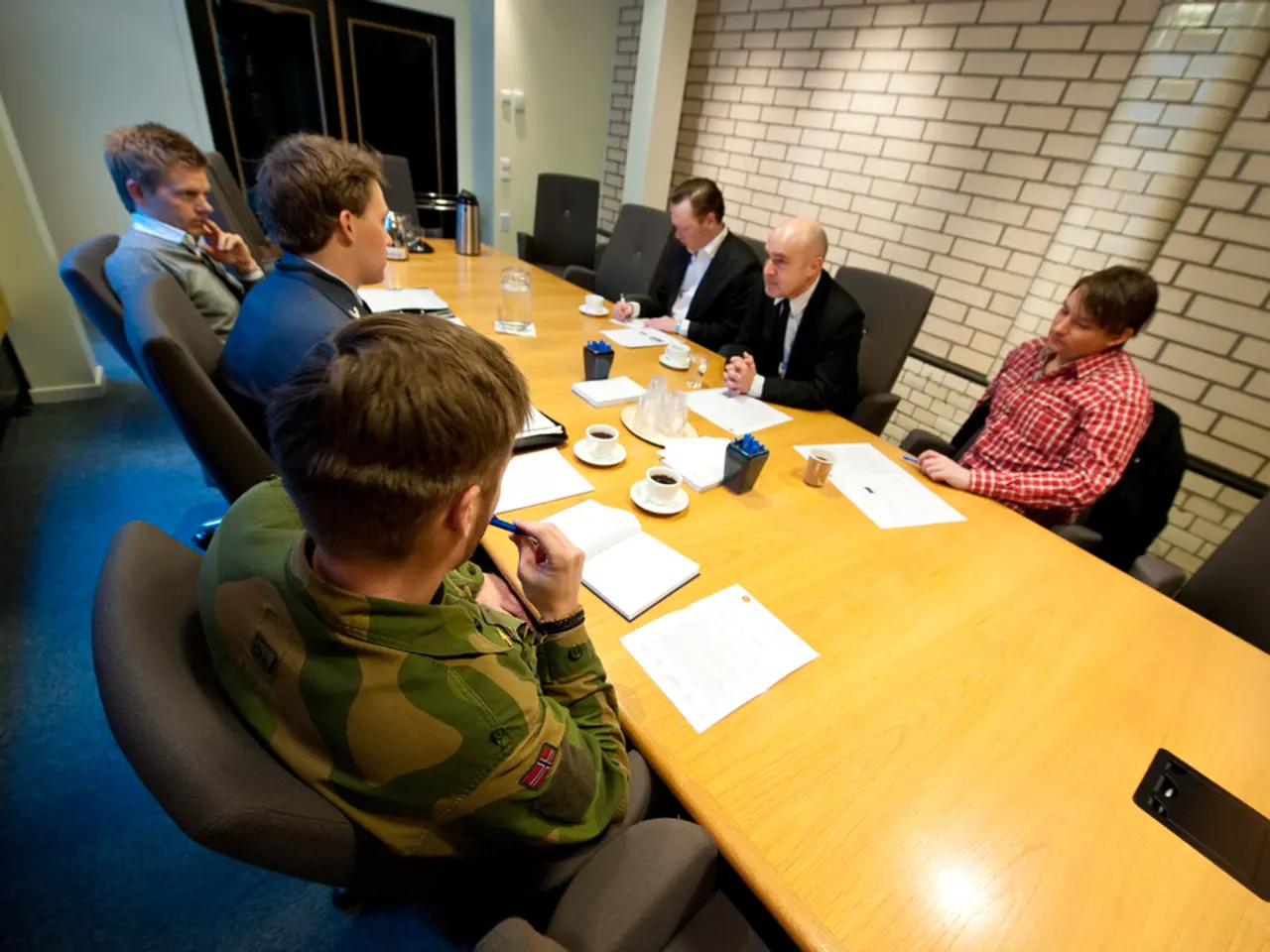
Parliament (Bundestag) establishes Commission to investigate COVID-19 (Corona) matters
The German Parliament has taken a significant step towards understanding the government's response to the COVID-19 pandemic by establishing an Enquete Commission. This commission, designed to comprehensively review and assess the government's strategies, will delve into the effectiveness of policies such as closures, mask mandates, and travel bans, and their lasting impacts on society and the economy.
The primary purpose of the Enquete Commission is to evaluate the government's strategies and draw lessons for future pandemics. This includes identifying successes and failures in the response efforts and understanding how these measures affected various sectors of society.
The commission's scope is broad, encompassing policy evaluation, lessons learned, accountability, and future preparedness. It will assess the impact of pandemic-related policies on public health, economy, and social structures, identify best practices and areas for improvement to enhance preparedness and response for future pandemics, address controversies such as mask procurement to ensure transparency and accountability in government actions, and develop recommendations to strengthen Germany's pandemic preparedness and response capabilities.
The commission will consist of 14 members of parliament and 14 experts, with the factions of the Union, SPD, Greens, and the Left each contributing members. The Union faction will send five members, the SPD and AfD each three, the Greens two, and the Left one.
The announcement of the Enquete Commission follows a heated debate between the leaders of the CDU and AfD over interruptions in the discussion about the establishment of the investigative committee. The AfD called for an investigative committee in addition to the Enquete Commission to examine the mask procurement by former Health Minister Jens Spahn. However, the AfD's corresponding motion did not receive the required majority in the plenary session.
The focus of the Enquete Commission is on learning from the pandemic, not on assigning blame. SPD MP Lina Seitzl confirmed that the COVID-19 pandemic had a huge impact on young people, vulnerable groups, caregivers, relatives, cultural creators, and the self-employed. Green politician Helge Limburg is satisfied with the improvements to the motion, which now emphasizes the "special burden on children and young people."
CDU MP Hendrik Hoppenstedt stated that the Enquete Commission is the right way to process the pandemic. Bundestag member Klöckner intervened in the discussion between CDU and AfD leaders. The AfD, led by Stephan Brandner, claimed that with their party, there would have been "no mask deals," "no travel bans," and "no curfews" during the pandemic.
This scientifically sound examination of the pandemic period is considered "indispensable" for restoring public trust in governance and ensuring that future responses are more effective and better aligned with societal needs, as called for by President Steinmeier. The Enquete Commission will begin its work in September and submit a final report by the end of June 2027.
[1] [German Parliament establishes Enquete Commission to investigate COVID-19 pandemic](https://www.bundestag.de/resource/blob/2003487/9f469395c6b768c89a480b1a2b6d3c0a/pressemeldung-034-2022-covid-19-enquete-kommission.pdf) [2] [German President Steinmeier calls for comprehensive review of pandemic response](https://www.bundespraesident.de/SharedDocs/Pressemitteilungen/DE/2021/01/2021-01-21-steinmeier-an-bundesregierung-corona-kommission.html) [3] [Germany's COVID-19 response under scrutiny with new commission](https://www.dw.com/en/germany-s-covid-19-response-under-scrutiny-with-new-commission/a-60899925)
- The Enquete Commission, established by the German Parliament, will delve into the effectiveness of health policies during the COVID-19 pandemic, focusing on lessons for future pandemics and improving Germany's response capabilities.
- This comprehensive review will encompass various aspects, including the impact on public health, the economy, and social structures, as well as best practices, areas for improvement, controversies, accountability, and the special burden on children and young people.
- The commission will also evaluate the science behind the measures taken, such as mask mandates and travel bans, and their role in health-and-wellness policies during the pandemic, aiming to restore public trust in governance and align future responses more effectively with societal needs.




%20establishes%20Commission%20to%20investigate%20COVID-19%20(Corona)%20matters)