Increase in reported measles cases in the United States surpasses previous records - Measles cases in the U.S. hit an all-time high
In a concerning development, the United States has witnessed a significant surge in measles cases, reaching a 33-year high with at least 1,277 confirmed cases across 38 states and Washington, D.C. as of early July 2025[1][3]. The largest outbreak has been in West Texas, where over 750 cases have been reported since late January 2025[1][2].
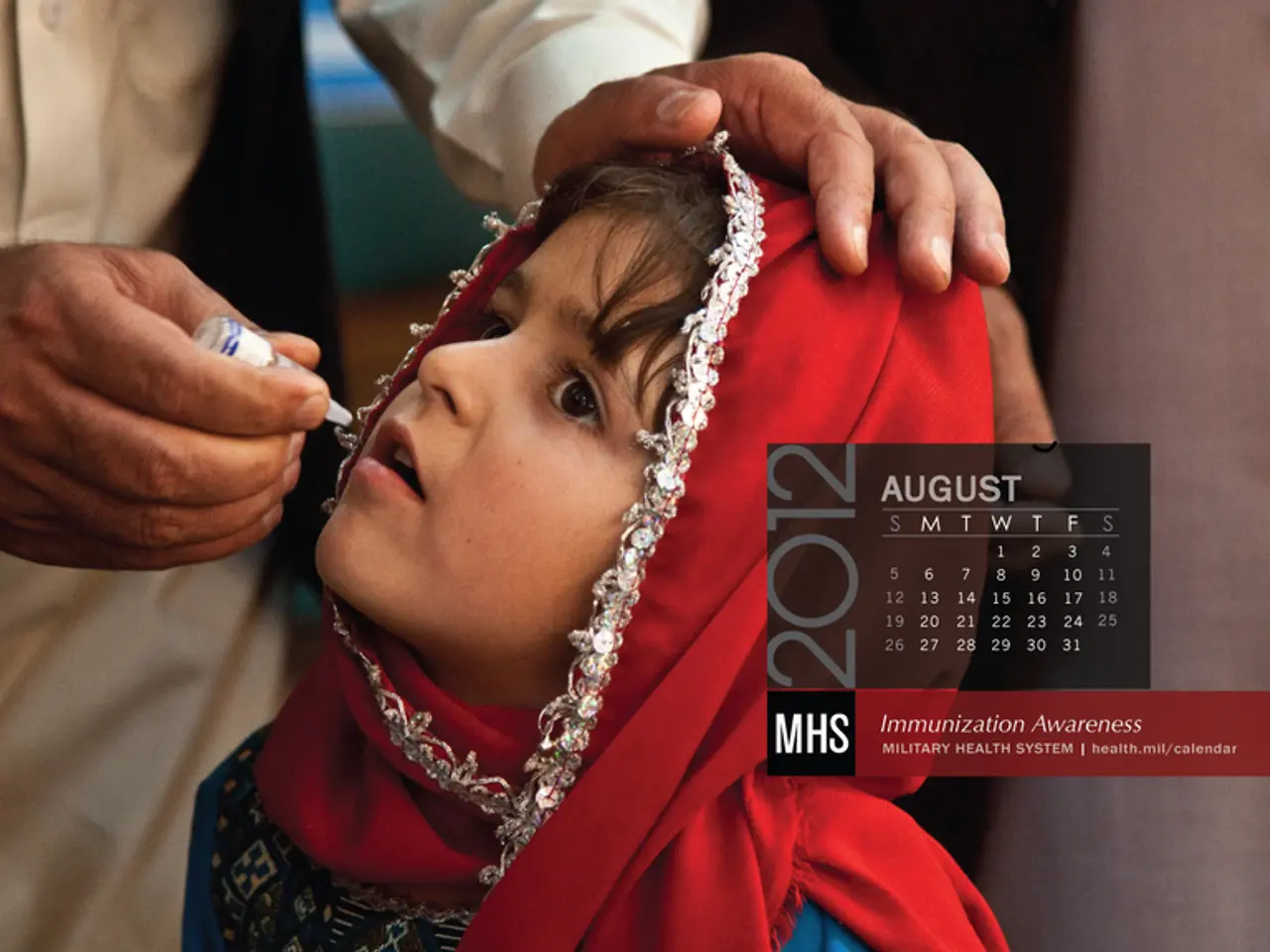
Vaccination is crucial in controlling measles outbreaks. The measles vaccine, typically administered as part of the MMR vaccine, is highly effective, with two doses providing 97% effectiveness against the disease[3][4]. However, a significant portion of the cases in 2025 have been among unvaccinated individuals, highlighting the importance of vaccination in preventing measles[1][3].
The Centers for Disease Control and Prevention (CDC) and Johns Hopkins University in Baltimore have reported these figures. Over 90% of those affected were not vaccinated[1]. Measles is one of the most contagious infectious diseases, and it can be life-threatening in severe cases[2]. Three deaths have already been reported this year due to measles[1].
While the current measles outbreak is primarily attributed to low vaccination rates and vaccine skepticism, the influence of figures like Robert F. Kennedy Jr. on public perception of vaccines is a broader issue that can impact vaccination rates over time. Kennedy, the US Health Minister, has faced criticism due to his previous expressions of doubts about the effectiveness of vaccinations[5].
In 2000, measles was considered eliminated in the USA, but there have been sporadic outbreaks since then. Anti-vaccination sentiment and lower vaccination rates in certain communities have contributed to the resurgence of measles. These communities often have lower herd immunity thresholds, making them more susceptible to outbreaks[4].
The current outbreak underscores the importance of maintaining high vaccination rates to protect public health. It is crucial for individuals to consult reliable health sources and make informed decisions about vaccination to help prevent the spread of measles and other infectious diseases.
[1] Centers for Disease Control and Prevention. (2025). Measles Cases and Outbreaks. Retrieved from https://www.cdc.gov/measles/cases-outbreaks.html
[2] World Health Organization. (2021). Measles. Retrieved from https://www.who.int/news-room/fact-sheets/detail/measles
[3] Johns Hopkins University. (2025). Coronavirus Resource Center. Retrieved from https://coronavirus.jhu.edu/
[4] National Institute of Allergy and Infectious Diseases. (2021). Measles. Retrieved from https://www.niaid.nih.gov/diseases-conditions/measles
[5] CNN. (2021). Robert F. Kennedy Jr. apologises for promoting 'discredited' vaccine theories. Retrieved from https://www.cnn.com/2021/07/16/us/robert-f-kennedy-jr-apology-vaccines/index.html
- The Commission could submit a proposal for a directive on the protection of workers from the risks related to exposure to ionizing radiation, emphasizing the importance of taking precautions in fields such as medical-conditions, respiratory-conditions, eye-health, science, and overall health-and-wellness, considering the potential long-term impacts like chronic diseases and mental-health issues.
- Just as vaccination is vital in controlling measles outbreaks, science-backed information and awareness campaigns could plays a pivotal role in educating the public about the benefits of vaccines, combating misinformation, and addressing concerns related to fitness-and-exercise and mental-health.
- As measles is one of the most contagious infectious diseases and can be dangerous in severe cases, similar attention should be given to the protection of workers and the general public from other harmful substances like ionizing radiation, which can lead to chronic diseases and detrimental effects on eye-health.
- In addition to maintaining high vaccination rates to protect public health, it is essential to advocate for workers' rights and ensure that appropriate measures are taken to protect them from potentially hazardous ionizing radiation in the workplace, promoting a holistic approach to health-and-wellness and fitness-and-exercise.