
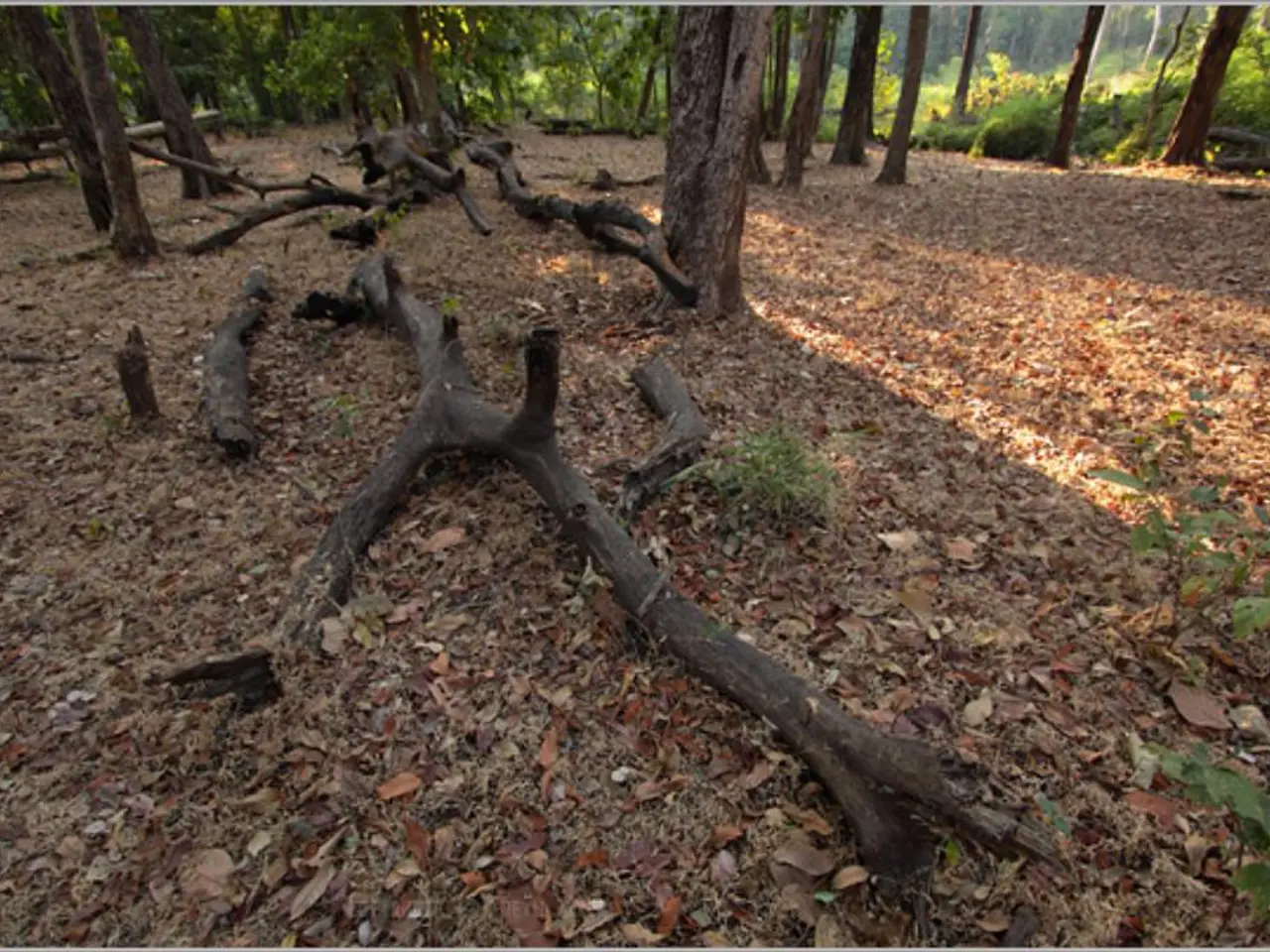
Low-Cost, High-Profit Agricultural Venture: Bilwa Farming for Small-Scale Farmers on Inexpensive Land
The **white bilwa tree**, scientifically known as Semecarpus anacardium, is a deciduous species that holds significant importance in Ayurveda and local folk medicine. Known as the marking nut tree, this resilient species thrives in warm climates with relatively low rainfall, making it an attractive option for marginal lands and rain-scarce regions.
In traditional medicine, the white bilwa tree is renowned for its diverse medicinal properties. Externally, it is used to treat joint pain, skin disorders, and boils. Internally, it is believed to improve digestion, treat respiratory issues, and act as a nerve tonic. Modern research has backed these claims, revealing the tree's anti-inflammatory and antimicrobial properties, reinforcing its relevance in contemporary medicine [1].
Cultivating the white bilwa tree is considered a low-input, high-value option for farmers. The tree prefers open, sunny areas with well-draining soil and performs best at elevations up to 1000 meters above sea level. Seeds are sown directly in polybags or nursery beds and allowed to germinate over 20 to 30 days. The saplings can be transplanted into the field after 6-8 months, once they have grown to about 30-45 cm in height. The ideal spacing between two white bilwa trees is about 5 meters [1].
The market potential of the white bilwa tree is significant, particularly due to the growing interest in herbal and alternative medicine worldwide. The processed marking nut oil can fetch between Rs. 500 to Rs. 1,000 per kilogram in the herbal product industry. By cultivating this tree, farmers can earn sustainable income while contributing to the preservation of a culturally significant species. The demand for medicinal plants is increasing globally, and the white bilwa tree, with its proven medicinal properties, can help build resilient farm incomes [1].
Farmers can sell the dried nuts directly to local traders or collaborate with Ayurvedic companies and herbal cooperatives for better prices. Setting up small-scale processing units with proper safety measures could further enhance value addition and income. The main product extracted from the white bilwa nut is oil, used in Ayurveda to treat various ailments such as arthritis, respiratory issues, and nerve disorders.
However, care must be taken during the handling of the black, kidney-shaped fruit called the marking nut, as the juice or oil from the shell is caustic and can irritate the skin. The inner kernel of the white bilwa nut is sometimes consumed in small quantities after detoxification, but this should only be done under expert guidance due to potential toxicity.
Given its role in traditional medicine and resilience to harsh environments, the white bilwa tree deserves greater attention in India's agroforestry and conservation programs. Its cultivation can support local economies and contribute to environmental conservation by promoting sustainable land use practices.
**Key Points:** - **Medicinal Uses:** Anti-inflammatory, antimicrobial, and as a nerve tonic. - **Cultivation:** Low-input, high-value for marginal lands. - **Market Potential:** High demand in herbal medicine; supports sustainable income and conservation efforts. - The white bilwa tree prefers open, sunny areas with well-draining, rocky, or lateritic soils and performs best at elevations up to 1000 meters above sea level. - Internally, white bilwa is said to improve digestion, treat respiratory issues, and act as a nerve tonic. - Care must be taken during the handling of the black, kidney-shaped fruit called the marking nut, as the juice or oil from the shell is caustic and can irritate the skin. - Seeds are sown directly in polybags or nursery beds and allowed to germinate over 20 to 30 days. - The white bilwa tree has medicinal importance in Unani and Ayurvedic systems, traditionally used to treat joint pain, skin disorders, and boils. - The ideal spacing between two white bilwa trees is about 5 meters. - The saplings can be transplanted into the field after 6-8 months, once they have grown to about 30-45 cm in height. - Propagation of the white bilwa tree is generally done through seeds, collected from mature fruits during the dry season (February to April). - The white bilwa tree bears fruit from the fifth or sixth year onward, with full yield potential after 10-12 years. - The inner kernel of the white bilwa nut is sometimes consumed in small quantities after detoxification, but this should only be done under expert guidance due to potential toxicity. - The white bilwa tree is often overlooked in modern agriculture but holds tremendous potential, particularly for farmers in dry and degraded areas.
The white bilwa tree, with its known anti-inflammatory and antimicrobial properties, is not only significant in traditional medicine but also plays a role in health-and-wellness, with internal usage believed to improve digestion and treat respiratory issues. As the demand for medicinal plants continues to rise globally, cultivating the white bilwa tree can provide a sustainable source of income in the health-and-wellness sector, due to its high market potential in the herbal product industry.