
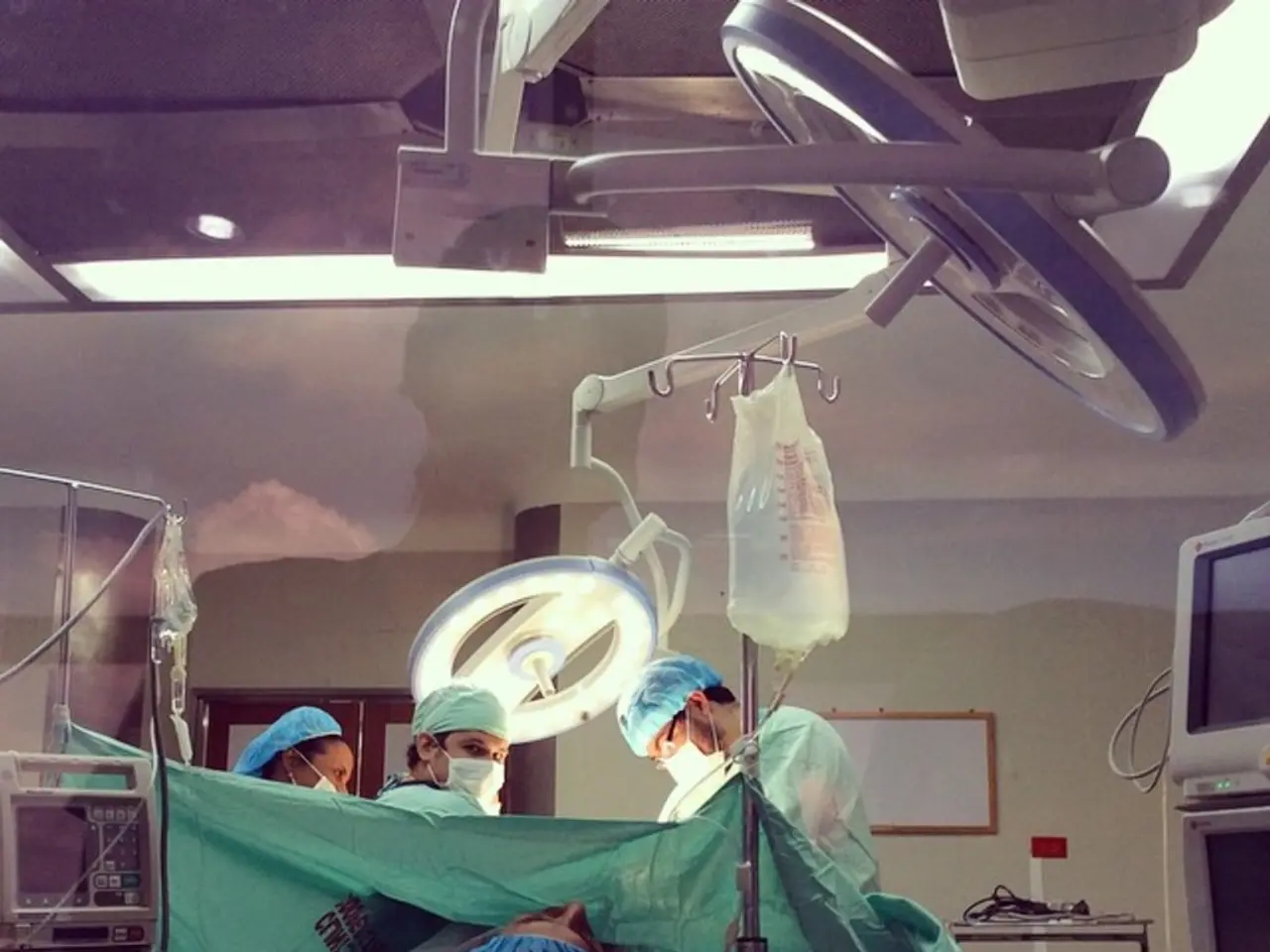
Approval Granted for Advanced Robotic Surgical Devices in UK
The National Health Service (NHS) in the UK is set to undergo a significant transformation with the roll-out of robotic surgery systems, as reported by patient organisations and NICE, the National Institute for Health and Care Excellence. Eleven robotic surgery systems have been approved for use in the NHS, with six systems receiving conditional approval for orthopaedic surgery and five for soft tissue procedures.
These innovative technologies, according to Dr Anastasia Chalkidou, programme director of NICE's HealthTech programme, have the potential to revolutionise both soft tissue and orthopaedic surgical care in the NHS. The benefits of robotic surgery systems are numerous and include greater precision and dexterity, less invasive surgery, faster recovery, improved workflow and productivity, enhanced surgeon capabilities, and positive patient experiences.
Robotic systems can perform movements more precise than the human hand, improving surgical accuracy especially in delicate soft tissue and orthopaedic surgeries. Procedures are done through millimeter-sized incisions, resulting in reduced pain, bleeding, risk of infection, and hernias compared to traditional open surgery. Patients typically experience quicker recovery times, allowing earlier return to normal activities and significantly reduced length of stay in hospital.
The adoption of robotic surgery is also seen as a boon for healthcare efficiency. Robotic systems enable surgeries to be completed with fewer staff, improving workflow efficiency in hospital settings. Surgeons benefit from 3D high-definition vision, image magnification, wristed instrument precision, and better ergonomics, contributing to improved surgical outcomes and reduced fatigue.
Patients report less post-operative pain, quicker recoveries, and higher satisfaction, leading to improved quality of life after procedures like hysterectomy and reconstructive surgery. These findings are supported by NICE approvals of multiple robotic systems for these types of surgery in the NHS and by patients’ positive feedback from specialist centres using robotic-assisted surgery.
While the initial roll-out is promising, NICE will collect further evidence over the next three years to demonstrate the cost-effectiveness of robot-assisted surgery. The data gathered will help ensure NHS resources are directed toward interventions that deliver meaningful clinical benefits and long-term value to the health service.
In addition to the robotic surgery roll-out, the UK Health Security Agency (UKHSA) has launched innovative metagenomic surveillance to enhance health security. Meanwhile, NICE's HealthTech programme is evaluating how innovative technologies can improve patient care, with the first Health Technology Evaluation on AI in analysis of X-rays for lung cancer published in September 2023.
For comments or questions about this article, please email [email protected]. Millions of patients are expected to benefit from these transformative advancements in the NHS.
- The adoption of robotic surgery in the NHS, driven by advancements in health tech, has the potential to significantly improve patient care and well-being, as it offers benefits such as greater precision, less invasive surgery, and faster recovery.
- The UK Health Security Agency (UKHSA) is further enhancing health security through innovative metagenomic surveillance, while NICE's HealthTech programme is evaluating digital health technologies to improve patient care and outcomes, with a focus on AI applications in medical-conditions analysis.
- The transformative advancements in the NHS, including the roll-out of robotic surgery systems and digital health technologies like AI for medical-condition diagnosis, are expected to lead to improved health-and-wellness and higher quality of life for millions of patients.